

Introduction: Navigating the Complex World of Hotel Ratings
For anyone planning a trip, whether for business or leisure, the choice of accommodation is perhaps the most significant decision that shapes the entire travel experience. The sheer volume of options available today, ranging from boutique hostels to ultra-luxury resorts, can feel overwhelming, but travelers often narrow their focus by relying heavily on the familiar star rating system. These stars—ranging from one to five and sometimes beyond—are intended to act as a standardized shorthand, giving prospective guests a quick, easy way to gauge the expected quality, service level, and facilities of a property. However, the reality of hotel ratings is far more complex than simple numerical superiority.
Crucially, the criteria for awarding stars can vary dramatically depending on the geographical location. A five-star hotel in one country might boast amenities that only qualify as four-star in a different region with stricter standards. Moreover, many online travel agencies and independent review sites use their own proprietary rating systems, adding layers of confusion to what should be a straightforward comparison. Therefore, relying solely on the star count without understanding the fundamental differences in service and facility offerings, particularly between the mid-range 3-star and the elite 5-star categories, is a common pitfall that can lead to disappointment or unnecessary expense.
Choosing the right hotel is less about maximizing the star count and more about aligning the property’s true value proposition with the traveler’s specific budget, priorities, and purpose of the trip. A business traveler needing reliable Wi-Fi and proximity to a convention center has different requirements than a honeymoon couple seeking an all-inclusive spa experience. This extensive guide will dissect the fundamental, practical differences between the 3-star and 5-star hotel categories, providing a strategic framework for decision-making. We will explore service expectations, room standards, amenities, and location factors, empowering travelers to make informed choices that truly enhance their journey without overspending.
1. Dissecting the Hotel Rating System
The star rating system is the universal language of hospitality, but its criteria are often loosely defined and open to interpretation, particularly by different rating bodies.
Understanding what each category fundamentally represents is the starting point for making an informed choice.
A. The Purpose of Star Ratings
The fundamental Purpose of Star Ratings is to classify hotels based on a standardized set of features and service levels. They are intended to provide consumers with a quick, objective measure of quality expectation.
Ratings typically focus on measurable factors like the presence of a restaurant, room size, and 24-hour reception availability.
B. Defining the 3-Star Standard
The Defining the 3-Star Standard is centered around providing a reliable, mid-range experience. A 3-star hotel offers quality accommodations that are comfortable, clean, and functional.
Guests can expect professional service, often with a full-service restaurant or café, decent amenities like a fitness center, and consistently clean rooms.
C. Defining the 5-Star Standard
The Defining the 5-Star Standard is all about luxury, personalized service, and exceptional quality across every touchpoint. These hotels aim to provide an unforgettable, immersive experience.
The criteria demand superior quality furnishings, extensive luxury facilities like multiple dining options and spas, and highly proactive, personalized service.
D. The Variation in Global Criteria
Travelers must acknowledge the Variation in Global Criteria. Some regions use strict, government-regulated guidelines (like the AAA in the US or official tourism boards in Europe).
Others rely on standards set by global travel consortiums or booking platforms, meaning a 5-star rating might reflect different amenity and service levels depending on where the hotel is located.
2. Service and Staff Experience
The most pronounced difference between the two categories lies not in the physical building, but in the level of service delivered by the staff, which fundamentally impacts the guest experience.
The 5-star experience is proactive and anticipatory, while the 3-star experience is reliably reactive and professional.
E. 3-Star Service: Reliability and Efficiency
3-Star Service prioritizes reliability and efficiency. Staff are professional, friendly, and adept at handling standard requests efficiently, such as check-in, check-out, and basic inquiries.
The service model is generally reactive: the staff will assist when asked, but they typically will not anticipate needs or offer highly personalized interactions.
F. 5-Star Service: Proactive and Personalized
5-Star Service is characterized by proactive and personalized attention. Staff are trained to anticipate guest needs before they are voiced, often remembering preferences from prior stays.
Guests can expect a higher staff-to-guest ratio, dedicated concierge services, butler services, and seamless, individualized attention from arrival to departure.
G. Concierge and Support Quality

The Concierge and Support Quality differs significantly. A 3-star hotel may have a reception desk that offers limited local recommendations or travel assistance.
A 5-star hotel features an expert concierge team capable of securing last-minute reservations at exclusive venues or arranging highly customized travel experiences.
H. Room Service and Availability
Room Service and Availability is a key differentiator. 3-star properties may offer limited room service during set hours, often utilizing a small, standardized menu.
5-star hotels typically offer 24-hour, comprehensive room service from their full-scale, often multi-outlet, fine dining kitchens.
3. Room Standards and In-Room Amenities
The physical space and quality of furnishings within the room itself are clearly defined by the star rating, impacting comfort, convenience, and aesthetic pleasure.
The materials, technology, and sheer size of the room generally increase dramatically with each star level.
I. 3-Star Room: Cleanliness and Functionality
A 3-Star Room excels in cleanliness and functionality. Rooms are well-maintained, comfortably sized, and include necessary basics like a comfortable bed, adequate lighting, and reliable climate control.
The furnishings are often durable and standardized, focused on meeting essential guest needs rather than providing luxury features.
J. 5-Star Room: Luxury and Technology
A 5-Star Room prioritizes luxury and technology. Rooms are usually substantially larger, featuring designer furnishings, premium linens (high thread counts), and sophisticated in-room technology (smart controls, high-end entertainment systems).
The décor is designed to be aesthetically pleasing and unique, using high-quality materials such as marble and custom millwork.
K. Bathroom Amenities and Finishing
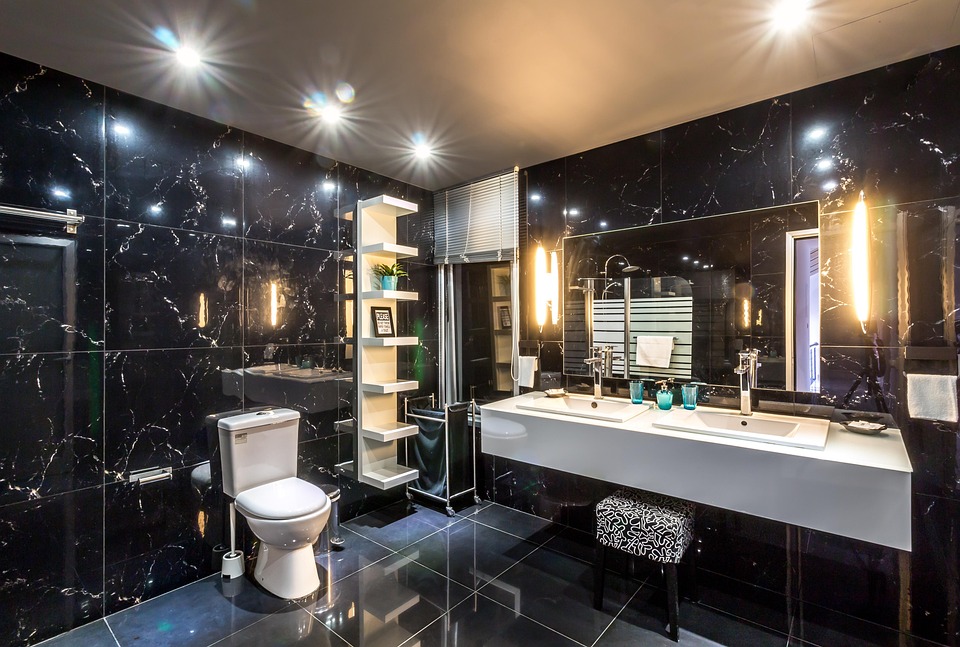
The Bathroom Amenities and Finishing provide an easy visual distinction. 3-star bathrooms are clean and functional, with basic bath products and standard towels.
5-star bathrooms are often finished in stone, feature separate walk-in showers and soaking tubs, high-end designer toiletries, and plush, oversized towels and bathrobes.
L. Minibar and Refreshments
The standard Minibar and Refreshments also reflect the rating. A 3-star minibar may contain basic drinks and snacks, often requiring an extra charge.
A 5-star room often includes high-end or gourmet complimentary items, a sophisticated coffee maker, and frequently, a dedicated turndown service with complimentary sweets or water.
4. On-Site Facilities and Dining Options
The scope and variety of communal amenities and dining outlets available on the premises are a central component of the star rating system, catering to different lifestyle needs.
A higher rating implies a greater selection and a higher quality standard for these shared facilities.
M. 3-Star Facilities: Essential Comfort
3-Star Facilities focus on essential comfort and convenience. Guests can typically expect a reliable on-site restaurant or café, a functional fitness center, and sometimes a basic pool or business center.
These amenities are sufficient for basic needs but are unlikely to be the primary reason a guest chooses the hotel.
N. 5-Star Facilities: Extensive Luxury
5-Star Facilities offer an extensive array of luxury options designed to meet every possible guest need without leaving the property. This often includes multiple specialty restaurants (e.g., fine dining, casual, international).
Guests can also expect world-class spas, elaborate pool areas, private beach access (where applicable), and multiple high-end bars or lounges.
O. Dining Quality and Variety
The Dining Quality and Variety are markedly different. A 3-star hotel offers decent quality, consistent food.
A 5-star hotel often features acclaimed chefs, sommelier services, and diverse, sophisticated menus that are considered destinations in themselves.
P. Meeting Spaces and Business Centers
The quality of Meeting Spaces and Business Centers often reflects the clientele. 3-star hotels may offer a simple meeting room and a computer terminal for business use.
5-star hotels provide technologically advanced, state-of-the-art conference facilities and private boardrooms, catering to high-level corporate and event needs.
5. Strategic Decision Making: Which Hotel is Right for You?
Choosing between a 3-star and a 5-star hotel is less about which is objectively “better” and more about which one aligns perfectly with the trip’s purpose and the budget constraints.
The smartest traveler makes a cost-benefit analysis based on their personal priorities.
Q. The Budget and Value Priority
The choice must always align with The Budget and Value Priority. If the travel funds are limited, choosing a high-quality 3-star hotel provides excellent value by securing cleanliness, comfort, and reliability without the prohibitive cost of unused luxury amenities.
A 3-star hotel is often the best financial decision when the majority of time will be spent outside the hotel exploring the destination.
R. Purpose of Travel
The Purpose of Travel dictates necessity. For a quick business trip with long hours outside the hotel, the convenience of a good location and reliable Wi-Fi (easily found at a 3-star level) often outweighs the need for a luxury spa.
For a special occasion, honeymoon, or rest-and-relaxation trip, the immersive, personalized service and facilities of a 5-star hotel are often justified as part of the overall experience.
S. Location and Accessibility
Always prioritize Location and Accessibility over an extra star. A high-quality 3-star hotel located centrally or near critical transport hubs can be a significantly better choice than a 5-star resort located far from the main attractions or business center.
Time saved commuting is often more valuable than a high-thread-count sheet.
T. Reading Recent Guest Reviews
Beyond the official rating, Reading Recent Guest Reviews is crucial. Look for consistency in reviews regarding the specific things you value: reliable hot water, quiet rooms, or strong internet.
A well-rated 3-star hotel with consistently positive recent reviews often outperforms a struggling 5-star hotel resting on its past reputation.
U. Leveraging Loyalty Programs
Travelers with brand loyalty should consider Leveraging Loyalty Programs. Membership perks often bridge the gap, potentially granting a 3-star guest free Wi-Fi, breakfast, or room upgrades that push the experience closer to the 4-star level.
This allows the budget traveler to strategically optimize their lower-cost choice.
Conclusion: Matching Expectations to Reality

The selection of a hotel, guided by the conventional star rating system, is a fundamental decision that defines the quality of any travel experience, yet this choice must be driven by rigorous self-assessment, not merely by the lure of higher numbers. A 3-star hotel is an exemplar of utility, offering reliability, cleanliness, and essential comfort, making it the perfect choice when the travel budget is constrained and the trip’s focus is primarily on external exploration.
Conversely, the 5-star establishment represents a comprehensive commitment to immersive luxury, distinguished by highly proactive, personalized service, extensive gourmet dining options, and superior in-room technology designed to create an exceptional, self-contained experience. The truly smart traveler understands that achieving peak satisfaction requires perfectly aligning the hotel’s actual offerings with the trip’s specific purpose and the individual’s core priorities. The decision is ultimately a careful calculation: a choice between highly efficient utility and expansive, unparalleled luxury.

